WELCOME TO THE YOGA AND JUDAISM CENTER BLOG

The primary focus of this yoga is not on physical exercise, but is rather "yoga beyond the mat," focusing on meditation, mysticism, philosophy and psychology.
Likewise, the focus on Judaism here is on the spirituality within Judaism, not the religion.
Your comments and posts are welcome.

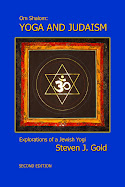
YOGA AND JUDAISM, SECOND EDITION NOW AVAILABLE

YOGA AND JUDAISM, SECOND EDITION is now available in broad distribution. While much of the substance of the material and message of the first edition remains the same, the Second Edition contains some corrections, many style and presentation revisions, and added material on Hebrew Mantras and Jewish Healing Meditation similar to the articles on the blog, but revised. Anyone who has already purchased the first edition is certainly welcome and encouraged to buy the Second Edition if you would like to have a spiffed-up volume complete with the new material all in one place. First-time buyers are encouraged to purchase the Second Edition instead of the first. The Second Edition is available at the publisher’s web site, http://stores.lulu.com/yajc or www.lulu.com and search “Yoga and Judaism” and at internet retailers, such as Amazon, Amazon UK and Barnes and Noble.

Thursday, December 10, 2009

Quote of the Week 117 - Help Me to Help Myself

Well, I tried so hard to stay alive

But the angel of destruction keeps on

Houndin’ me all around

But I know in my heart

That we never really parted

Oh no

They say the Lord helps those

Who help themselves

So I’m asking this question

In the hope that you’ll be kind

Cause I know deep inside

I was never satisfied

On no

Oh help me

Oh help me now

Please help me Lord

Help me to help myself


John Lennon


[I recently purchased John’s last recorded album, Double Fantasy. As is the practice with most CD reissues, it had a couple of bonus tracks not on the original album. These are the lyrics from one of the bonus tracks that was a rough home recording made by John alone accompanying himself on piano. The lyrics as clearly enunciated on the track and reproduced above are hauntingly prescient. There is a change in the lyrics as printed in the libretto accompanying the CD, which takes the edge off. The phrase “stay alive” in the first line is changed to “settle down”. Apparently the producers, or perhaps Yoko, couldn’t move themselves to list these words in the libretto.]

Sunday, December 6, 2009

Reb Zalman Schacter-Shalomi Interview Video

Following is a link to a wonderful video of a recent interview with Reb Zalman Schacter-Shalomi. I highly recommend that you take the time to view it. If you click on the title to this post, it should take you there. (The internet is a wonderful thing!)


http://www.patheos.com/Resources/Additional-Resources/In-Exile-Together-A-Dialogue-of-Faith.html

Friday, December 4, 2009

Quote of the Week 116 -Changing the Rules of the Game

I’d like to see our society change the rules of the game. The winner at the end of the day should be the best humanitarian, not the person who hoarded the most money.


Pamela Wible, MD [From an interview with Jamie Passaro, The Sun magazine, November 2009. Dr. Wible dropped out of “medical mill” practice and initiated a “community-designed medical clinic” in Eugene, OR]

Saturday, November 21, 2009

Bibliography/Book Review; Schacter-Shalomi, Zalman; Paradigm Shift, et al

Bibliography/Book Review;

Schacter-Shalomi; Paradigm Shift; Wrapped in a Holy Flame, Teachings and Tales of the Hasidic Masters, et al.


Zalman Schacter-Shalomi is an extraordinary person. He grew up in Europe, but his family had the prescience to escape the impending Holocaust and immigrate to the U.S. There, he was trained and ordained as a rabbi within the Chabad Lubavitcher Hasidic movement. He stepped outside of this insular community by attending Boston University, where he engaged in challenging and life-changing encounters with the black minister there, Howard Thurmond, who also served as a mentor to Martin Luther King, Jr. These vista-expanding encounters opened up Schacter-Shalomi to numerous other possibilities of viewing the world and his place in it.


Along the way to becoming a truly 20th Century Renaissance man, he dropped acid with Timothy Leary and explored many forms of Eastern spirituality and mysticism, among other things. The confines of Lubavitcher Hasidism could no longer contain him, although he remained deeply anchored within his Jewish identity. He saw a need for another avenue to express Judaism in a meaningful way for himself and for many alienated Jews, particularly children of the 60’s. Eventually, through his efforts and teachings, and with a growing group of sympathetic students and followers, the Jewish Renewal Movement was born.


Paradigm Shift is akin to the Declaration of Independence of the Jewish Renewal Movement. It posits that the Jewish tradition, as any religious tradition, needs to have an evolutionary nature to it and remain receptive to adaptation as times and cultures change. Particularly with the advent of the Reform movement in the 1700’s, the tension between tradition and innovation has been stretched tremendously. Schacter-Shalomi warns against “throwing the baby out with the bathwater” by going too overboard with reform and innovation which may eliminate valuable and essential aspects to the true core of spirituality lying within. He advocates taking a critical look at all aspects to traditional liturgy, doctrine and dogma. However, before throwing anything onto the refuse heap, examine it closely from a perspective of deep spirituality and mysticism to ascertain if a new and spiritual interpretation can be extracted from it or applied to it, bringing new life into it relevant to today. He concludes that many things rejected by other reform movements may be worth saving applying this approach. This is because many of the other reform movements approached Judaism as more of a repository of intellectually and culturally based morality and way of life, rejecting what they perceived as the irrational superstitions of deep spirituality and mysticism. Through his experience and experimentation with a wide variety of forms of spirituality and mysticism, everything from many forms of Eastern mysticism, to Sufism, Christian mysticism, and Native American traditions, Schacter-Shalomi saw the value and reality of what was conveyed in these forms, and realized that Judaism had its own unique version. He has been a featured participant in many inter-tradition conferences, including some organized by the Himalayan Institute, the yoga/Vedanta organization I have been connected with for 30 years.


Spirituality and mysticism operate in a realm of the nonrational, distinct from the irrational eschewed by other reform movements. Rationality and nonrationality are parallel realms, not necessarily inconsistent. He has encouraged discovery and experimentation to salvage traditional forms by infusing them with this new perspective. One basic tenet of Jewish Renewal is of egalitarianism, that women and men stand on equal ground in all respects concerning spiritual and religious matters. Another aspect is a willingness to recognize the validity of other traditions, and incorporate elements of them into the Jewish experience. Yet another is an emphasis on individual and collective responsibility and sensitivity as participants in the larger world community, which has engendered a focus on eco-kashrut, application of kosher principles to environmental/green causes, and spiritually-grounded social activism. Schacter-Shalomi’s influence on modern Jewish thinkers and writers is far-reaching. In my search for books by modern writers about Jewish mysticism and Kabala, it is hard to find an author who does not acknowledge gratitude and guidance by Schacter-Shalomi, and with good reason. I highly recommend this book as a foundational book of his thinking, and any other book he has authored, contributed to, or in which the author acknowledges his influence. There is also a wonderful biographical sketch of him contained in the book A Rare and Precious Thing; The Possibilities and Pitfalls of Working with a Spiritual Teacher by John Kain.


For more information about Reb Zalman and Jewish Renewal, visit their main website at www.aleph.org. For a website dedicated to social activism rooted in Jewish Spirituality, visit www.theshalomcenter.org. Both of these sites are listed in the “Links” section of the Yoga and Judaism blog.

Thursday, November 19, 2009

Quote of the Week 115 - Sacred Activism

Millions of people all over the world are now waking up to the need to become sacred activists. The collapse of the world’s financial markets, the growing universal understanding that the environment is in serious danger – and that a wholly new energy policy is urgently needed – and the menace of nuclear war in the Middle East and between India and Pakistan have started to change everything. The election of Barack Obama as the president of the United States, the focusing symbol of the free world, has opened up a new, sober, and urgent conversation about essential values, and the need for a radical transformation of our way of being is breaking out everywhere.


So how exactly do you become a sacred activist? I believe it’s by making a steady commitment to combine five interlinked forms of service – to the Divine, to yourself as an instrument of the Divine, to all sentient beings in your life, to your local community, and to the global community.


When my friends and students who want to help ask me what they should do, I always say the same thing: follow your heartbreak. Determine which one of all the causes in the world really breaks your heart. When you identify this, you have found the cause you will always have the energy and passion to work for. Once you have identified this cause, act immediately in your local community, so your heartbreak doesn’t remain abstract but becomes a living force of practical compassion in your daily world.


Andrew Harvey [from an article in the Winter 2009-10 edition of Yoga + Joyful Living magazine, which is an adapted excerpt from his book The Hope: A Guide to Sacred Activism, Hay House (hayhouse.com)]

Sunday, November 15, 2009

Elisha The Prophet, Part Two

I recently received a private email asking what the stories in the last quote of the week about Elijah the Prophet mean. Are they simply an inspiration to have faith that miracles do happen or is there more? How did Elisha do these things?

Implicit in these questions is a broader question of how to approach understanding any kind of scripturally-based story, particularly ones conveying miracles. A good beginning point would be specific and personal to each individual. The reader should examine what their initial reaction was to the story, emotionally, intellectually, spiritually. What kind of impact, if any, did it have on them? Did it resonate in some way that might be difficult to articulate? What is the feeling behind that resonation? Perhaps it is worth sitting with, meditating on, pondering any such feelings that it evoked to see if further insight and understanding comes forward. If there appeared to be no particular impact on the reader, leaving them indifferent, cold or confused, then, before abandoning any effort at further understanding, it may be worthwhile to resort to other sources to find meaning. Jewish sources have identified a process known by the acronym, PaRDeS: P – Peshat – Plain – literal; R – Remez – Allusion – the entry point into the realm of the figurative, the allegorical; D – Derash – Exposition, a more in-depth homiletical approach, extracting deeper spiritual and ethical teachings; S – Sod – Secret, the deepest mystical, intuitive level beyond the rational, delving into the realm of the nonrational, as distinct from the irrational. Talmud and Midrash are the sources of traditional commentaries addressing the realms of Remez and Derash, while Sod is addressed in Kabbalistic writings.


As the person posing the question posed it to me, I will provide my answers to their questions as to the impact of these stories on me, and why I find them fascinating and worth repeating.


Concerning these and any stories involving miracles, I am always fascinated and inspired by such stories. They convey that the world and the universe is a much more glorious and fantastic place than what we usually encounter in the humdrum existence of our daily lives. If we keep our inner senses attuned, our inner eyes and ears open, we can become more receptive to experiencing such things more regularly in our daily lives. They are often subtle, and can be easily overlooked and ignored, or dismissed without a second thought. Stories of miracles are illustrations of something I firmly believe in, that anything is possible. If we view our lives as self-limiting, then we have defined those limitations and subject ourselves to them. If we view our lives as having limitless possibilities, even if not probabilities, we will have a different approach and perspective.


How did Elisha do these things? Well, to answer that question is a tall order indeed! The short answer is that Elisha followed the spiritual intuition he was provided as a servant of the Lord infused with Divine Guidance. I was fascinated and thrilled by the specifics of these stories as conveying subtle messages about the mechanics of how miracles occur. First, the true prophet miracle-worker always, ALWAYS, acknowledges that the source for their abilities lies beyond their separative selves, and originates with and is by the grace of a power beyond themselves, for which they never fail to express their gratitude. The Rasputins, the charismatic ego-maniacs of the world, while they may garner significant occult-type of abilities, forget the Source from beyond, which inevitably results in tragic consequences.

The significance to the first story for me lies mostly in the realm of the figurative, not the literal. However, on the level of the literal, I find it interesting that the commodity involved is oil. Oil was not merely used for cooking, it was used for anointing and massaging, and it was used as a fuel for providing functional and votive light. So it is this fuel for light that is being miraculously regenerated and serves as the basis for the continued support for the widow and her family. It leads right into the more figurative realm that this is more than a story and message of physical survival. It conveys an oft-repeated message of spiritual wealth, that what truly nurtures us at the deepest level of the spirit, of inner Divine Light, is always available, free of charge, and in abundance if we open up to it. It is our self-created obstacles that prevent this access. It is up to us to remove the obstacles so that the inspiration can flow unimpeded. That was the state of being of the prophets. They had that kind of access. I do not agree with the common notion that the type of revelation and gifts available to the prophets are not currently available, and will only become available again at the time of the coming of Messiah. I believe everyone has such potential, but few actualize it, because it requires brutally honest effort and self-purification on our part for the Grace to be bestowed, and most of us are afraid to engage in such an undertaking. God will meet us half-way. But most of the time, the horse won’t even go to the water, and even when the horse does go, as we all know, you can’t make him drink.

The second story stands in contrast to the first. The first involved a materially poor widow with children, while the second involves a materially wealthy married woman who is poor in another fashion, because she is childless. I am quite certain that there have been volumes of commentary written about this because of its complex set of circumstances and the extraordinary miracles of a conception after menopause, and bringing someone back to life. I have not personally encountered these commentaries, so I am strictly shooting from the hip as to how it fascinates me without the benefit of reading any other commentaries. My focus has not been as much on the miraculous conception as it has been on the second miracle of restoring life to the dead. She had never asked Elisha for anything, and didn’t ask him for a child. It was only due to his assistant revealing to Elisha her desire for a child by which Elisha came up with the perfect gift for her due to her faith and her honoring him. But the bestowing of this perfect gift, still due to a deep material desire, leads to the tragedy and grief of her son dying. This is yet another message not to erect the foundation of your life on anything in the relative world, because you subject yourself to the pain of loss. This woman was materially wealthy, but poor without a child. The child was given to her and then taken away. And then, somewhat reminiscent of the enigmatic and oft-debated story of Job, this source of wealth is miraculously restored. It is not clear whether this woman, in going to Elisha in her grief, was requesting or expecting the miracle that was bestowed, but it appears to be the first time she ever requested anything from Elisha, even if it was just for solace.

I can only say that I was fascinated with the procedures involved in bringing the boy back to life, without fully understanding all of it. The details are just fascinating. The preliminary instructions to the assistant, not to become distracted by speaking with anyone along the way, is an illustration of what in kabala is called "kavanah", one-pointed focused concentration and intention. Within this framework follows placing the staff on the child (and the staff, as I have expounded elsewhere in the context of Moses, is the staff of the serpent power of existential life, of the Shechinah/kundalini), and then lying face to face, eyeball to eyeball, mouth to mouth, hand to hand. The Tree of Life correlates with the human body, and the rudimentary life force/prana/ruach carried through the breath is what brought life to Adam. Sneezing in this case seems to be the equivalent to the first cries of a newborn baby, the expression of inhalation and exhalation, not only of breath, but of life force (think about it, sneezing begins with an inhalation, the “ah”, which is followed by an exhalation, the “choo”). And the sneezing seven times is indicative of energizing the seven primary life force centers identified in yoga as chakras, which have correlates in the kabala’s Tree of Life.

I hope that the above is sufficiently responsive to the questions asked. It’s about the best that I can do for now.

Thursday, November 12, 2009

Quote of the Week 114 - Elisha the Prophet

The Haftorah for the Torah portion of Vayeira comes from Kings 4:1 – 4:37, and relates two stories about the prophet Elisha. He lived in the Northern Kingdom of Israel, during the time after King Solomon, when there was a split between the Northern Kingdom, comprised of ten tribes, and the Southern Kingdom of Judah comprised of two tribes. It was a period of general decline and depravity. Some commentators say Elisha exhibited qualities similar to Abraham. The first story concerns a righteous woman who is the widow of another prophet. She falls on hard economic times and is about to lose her two sons into slavery because of debts she can not pay. Her only remaining possession of any value is one container of oil. Elisha instructs her to borrow as many empty vessels as possible, and to start filling those vessels from the one container of oil she has. Miraculously, as in the loaves and fishes story of the New Testament (which most likely borrowed from this earlier story), all of the empty containers are filled from the one container. Elisha then instructs her to sell the oil, which yields enough money to pay off the debts and support her family.


The second story concerns a wealthy elderly woman who is childless and whose story parallels that of Sarah. She had always shown great kindness to Elisha, recognizing his spiritual depth. She even made up a room for him to stay in her house whenever he passed through her town. He wanted to repay her with some kind of blessing or favor, but she always declined any such offer. His assistant points out to him her childless state despite her desire to have a child. Much as in the Sarah story, Elisha then tells her that she will bear a son in a year’s time, to which she expresses her disbelief, as she is an old woman past child-bearing age. However, in a year, she gives birth to a son, as prophesied. However, there is more to this story, for some time later, her son dies, and she goes to Elisha in her grief, after placing the corpse on the bed that Elisha would use in her house. There are a few interesting aspects to the events that follow. Elisha instructs his assistant to go ahead of them with Elisha’s staff, and “if you meet anyone, do not greet him and if anyone greets you do not reply; and place my staff on the child’s face.” Elisha then comes, prays to God, and the following takes place (Kaplan translation): “…he went up and lay upon the child, placing his mouth on the child’s mouth, his eyes on the child’s eyes, and his hands on the child’s hands. Then he stretched himself on him; and the child’s body became warm. Then he returned, and walked back and forth in the house; and went up and stretched himself upon him. The child sneezed seven times and opened his eyes.” And thus, through this interesting process, the dead child was brought back to life and returned to his ever-grateful mother.


Thursday, November 5, 2009

Quote of the Week 113 - Listen in Silence

Listen to me in silence, you islands; let the peoples renew their strength.

Isaiah 41-1

Thursday, October 29, 2009

Quote of the Week 112 - Jewish Atheist Spirituality

Is spirituality possible only in the context of divine inspiration? Of course not. Why do you need a god to experience awe at the grandeur and beauty of the natural world? Why do you need a god to feel inspiration and excitement, sometimes to the point of tears, upon seeing a beautiful work of art or hearing an incredible piece of music? Theists have no corner on the spiritual market…Secular Humanistic Jewish organizations eschew the divine and focus on the earthly essence of their existence…Despite the multiplicity of ways of acting out our secular Jewish consciousness, we are united, I hope, in the belief that human beings are in charge of human affairs without the need to seek divine intervention as inspiration or as the object of our supplication.


--Jerald Bain, emeritus professor of medicine at the University of Toronto and endocrinologist at Mt. Sinai Hospital, Toronto. From an article in the Autumn 2009 edition of Jewish Currents magazine. [Secular Humanistic Judaism is a movement of Jewish atheists who adhere to the perspective described above, with an emphasis on social activism and civil rights based upon ethical and moral principles, with roots in a heritage of left-wing activism and labor union support. Some of the leading organizations are the Congress of Secular Jewish Organizations, the Society for Humanistic Judaism, and the Workmen’s Circle. There are Secular Humanistic Jewish congregations and rabbis.]

Monday, October 26, 2009

Bibliography/Book Review; Kaplan, Aryeh. Jewish Meditation, A Practicla Guide; The Living Torah; Sefer Yetzirah, The Book of Creation, etc.

Bibliography/Book Review;
Kaplan, Aryeh. The Living Torah; Jewish Meditation, A Practical Guide; Sefer Yetzirah, The Book of Creation, In Theory and Practice; The Bahir Illumination; Meditation and the Bible; Meditation and Kabbalah.

Rabbi Aryeh Kaplan, ingrained in Orthodox Jewish practice and tradition, was nevertheless a pioneer and maverick who endured some controversy and criticism from within Orthodox circles. This was due to his being perhaps the earliest of modern Jewish teachers and writers to reveal to the general public aspects of traditional Jewish Meditation practices and related mystical teachings that had long been kept concealed within the province of secretive Kabalistic learning circles. His early works were the first cracking open of the floodgates that have since followed, resulting in the current glut of teachers and books on these subjects. He authored an incredible amount of thoroughly detailed and researched material in his relatively short life span. His writings are not as easily accessible to the casual reader as some other modern day authors on these subjects who followed him, such as Joseph Gelberman, Zalman Schacter-Shalomi, David Cooper, Arthur Green. He tends to be more on the dry, scholastic, academic side, although not quite as dense as the normal style of college professors or PhD candidates writing for scholastic journals or dissertations. This is because his scholasticism is obviously infused with the depths of personal experience, so his writings possess a potency that is lacking in mere intellectual exercises. But if you can stick with his writing and presentation style and wade through it a bit, you can be richly rewarded.

The Living Torah is his annotated translation of the Five Books of Moses and the related Haftorah portions. I have found that for any serious study of the Torah, particularly for those of us who know little biblical Hebrew and are relying on translations, it is important to compare at least two annotated translations. It is impossible for any translator to convey all of the nuances of meaning contained in the Hebrew, or the many “read-between-the-lines” extrapolations of meaning that have developed in the Talmud and other sources. Translators are constantly making difficult choices of what words to use in the primary text translation, and how extensive the annotations should be to provide alternatives and further elaboration and opinions. Anyone who reads only the main text of any translation without some supplementation via annotations or commentaries is barely scratching the surface of the rich texture of meaning and nuance. The primary text is almost like just a very brief outline or summary. There is no question that the choices translators make are influenced by their own prejudices, agendas and slants, and thus the need for reading more than one annotated translation. Kaplan’s version has gained a great deal of respect among many Jewish circles, and he honestly points out in his annotations many alternatives to what he selected for his primary translation. Many of his annotations are very brief, although he occasionally goes into great and intricate detail on some subjects.

Jewish Meditation, A Practical Guide is one of the ground-breaking works I mentioned above. He had earlier written Meditation and the Bible and Meditation and Kabbalah, both of which are on my “to do” list. In his introduction to Jewish Meditation, he admitted that the earlier works were not accessible for practical application for those not already familiar with basic theory and practice. Thus he wrote Jewish Meditation, A Practical Guide in response to a need for such a manual, and thus my reason to read it first and put the other books on this subject on the back burner. I will merely here add to the chorus of many others who highly recommend this work for anyone interested in meditation generally, and in Jewish meditation specifically.

Sefer Yetzirah, The Book of Creation, In Theory and Practice is Kaplan’s translation and extensive commentary on this significant kabalistic text, including its several versions. As discussed above regarding the Torah being just like an outline or summary which requires annotation and commentary to even begin to fully grasp the texture of meaning lying beneath the surface, this holds even more true for the Sefer Yetzirah, which is considered one of the primary texts of kabalistic teaching, along with the Zohar and the Bahir. That is because the primary text is extremely brief and terse, and without extensive elaboration through commentary by someone familiar with and capable of deciphering its short-cut code language and terminology, it is virtually inaccessible to the casual reader. As described in my introduction above, this is Kaplan the scholar and practitioner at his best. It is not a casual or easy read, but for anyone with an interest in the details, even the minutiae, of Jewish mysticism and esoterica, Kaplan is a master at articulating these intricacies.

His book on The Bahir is another on my extensive “to do” list. It looks like a treatment of this text similar to his treatment of the Sefer Yetzirah.

Thursday, October 22, 2009

Quote of the Week 111 - In the Beginning

AND THE EARTH WAS VOID AND WITHOUT FORM. This describes the original state-as it were, the dregs of ink clinging to the point of the pen-in which there was no subsistence, until the world was graven with forty-two letters, all of which are the ornamentation of the Holy Name. When they are joined, letters ascend and descend, and form crowns for themselves in all four quarters of the world, so that the world is established through them and they through it. A mould was formed for them like the seal of a ring; when they went in and issued, and the world was created, and when they were joined together in the seal, the world was established. They struck against the great serpent, and penetrated under the chasms of the dust fifteen hundred cubits. Afterwards the great deep arose in darkness, and darkness covered all, until light emerged and cleft the darkness and came forth and shone day came from the side of light, which is the right, and night from the side of darkness, which is the left, and that, having emerged together, they were separated in such a way as to be no longer side by side but face to face, in which guise they clung to one another and formed one, the light being called day and the darkness night, as it says, “And God called the light day and the darkness he called night.” This is the darkness that is attached to night, which has no light of its own, although it comes from the side of the primordial fire which is also called “darkness”. It remains dark until it is illumined from the side of day. Day illumines night, and night will not be light of itself until the time of which it is written, “the night shineth as the day, the darkness is even as the light” (Ps. CXXXIX, 12).

Zohar, Volume 1, Folios 31a and 31b, Soncino translation

Monday, October 19, 2009

10% Discount on YOGA AND JUDAISM, SECOND EDITION, ENDING SOON

This is just a friendly reminder that the 10% discount for direct sales from the publisher ends at the end of October. To get the discount, go to http://stores.lulu.com/yajc or www.lulu.com and search "Yoga and Judaism". At checkout, enter the coupon code FALLREAD (no spaces) and click the update cart button, which should show the discount.

This is also a reminder that YOGA AND JUDAISM, SECOND EDITION, is now available in broader distribution, including Amazon, Amazon UK and Barnes and Noble.